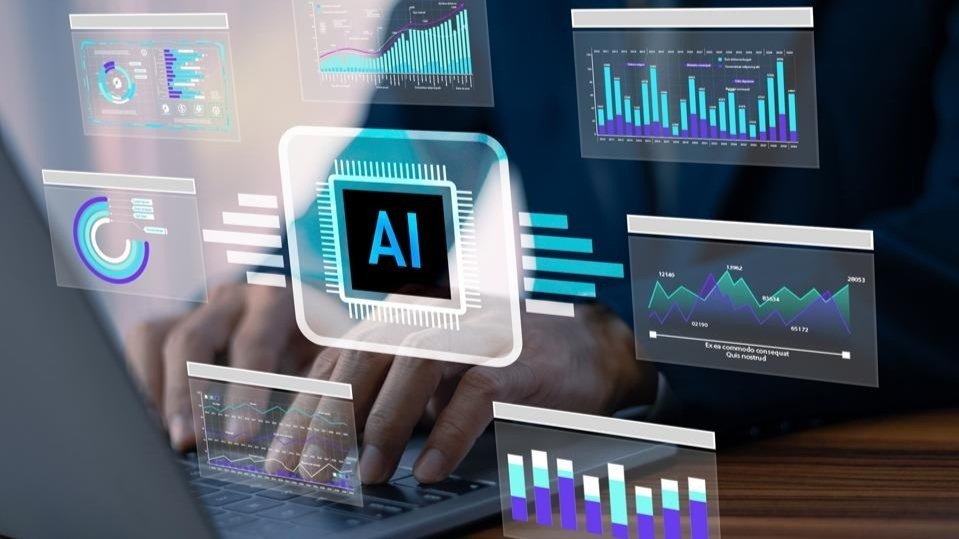
Explore how Edge AI changes real-time data analytics, looking at its benefits, business examples, the challenges it brings and how it differs from cloud AI.
Artificial intelligence is moving closer to the place where data is created.
For years organizations have relied heavily on cloud computing to store information run artificial intelligence models and generate business insights. However the rapid growth of Internet of Things devices, industrial sensors, cameras, connected vehicles, smartphones and smart infrastructure is changing how businesses process information.
Sending every piece of data to a cloud server is not always practical. Applications that require decisions can face challenges involving latency, bandwidth, connectivity, privacy and cost.
This is where Edge AI is becoming increasingly important.
By combining intelligence with edge computing organizations can process information closer to the device or location where it originates. Of relying entirely on centralized cloud infrastructure organizations can analyze selected data locally and respond much faster.
As companies increasingly adopt data analytics, intelligent edge computing is becoming an important part of the infrastructure that supports real-time insights, automation and faster decision-making.
What Is Edge AI?
Edge AI refers to deploying intelligence and machine learning models on devices or computing infrastructure located close to the source of data.
These environments can include:
- equipment and machinery
- IoT sensors
- Security and monitoring cameras
- Smartphones and wearable devices
- Retail systems
- Connected vehicles
- Medical devices
- Telecommunications equipment
- Edge servers and gateways
According to NVIDIAs explanation of Edge AI AI computation at the edge allows processing to take place closer to users and the data being generated rather than relying entirely on centralized infrastructure.
Consider a manufacturing plant using computer vision cameras to inspect products.
In a cloud architecture images might be captured on the production line, transmitted to a cloud environment, analyzed by a machine learning model and then returned with a decision.
With AI processing the model can operate directly on or near the production equipment. A defective product can therefore be identified without waiting for information to travel to and from a data centre.
Why Businesses Are Moving AI to the Edge
The rapid expansion of devices is generating enormous amounts of information.
Factories continuously collect equipment readings. Retail stores generate video and inventory information. Vehicles produce telemetry data while smart infrastructure monitors traffic, energy consumption and environmental conditions.
Transferring all of this information to centralized cloud platforms can create operational challenges.
Edge computing addresses part of the problem by placing computing resources to where information originates. Adding machine learning capabilities takes this architecture further.
Of simply collecting and transmitting information connected systems can increasingly analyze, classify, predict and respond locally.
This allows organizations to move from delayed analysis toward real-time intelligence and decision-making.
Edge AI vs. Cloud AI
Edge-based and cloud-based artificial intelligence’re not necessarily competing approaches. They serve purposes and can work together within a modern enterprise architecture.
Cloud infrastructure remains valuable for training models processing massive datasets storing information and conducting enterprise-wide analytics. Processing at the edge becomes particularly useful when organizations require responses, local computation, reduced data transmission or continued operation during connectivity interruptions.
| Feature | Edge AI | Cloud AI |
|---|---|---|
| Data Processing | Processes information to where it is generated | Processes information in centralized cloud infrastructure |
| Response Time | Designed for fast real-time responses | Can be affected by network latency |
| Connectivity | Can support some operations without continuous internet access | Generally depends more heavily on network connectivity |
| Data Transfer | Can reduce the amount of raw information transmitted | Often requires data to be transferred to cloud systems |
| Computing Power | Limited by local hardware capabilities | Provides access to large-scale computing resources |
| Best Use Cases | IoT, manufacturing, robotics, cameras, vehicles and real-time monitoring | Model training, enterprise analytics, storage and computationally intensive workloads |
| Privacy Potential | Selected sensitive information can remain closer to its source | Information may need to be transferred or centrally stored |
| Management | Requires management of distributed devices and models | Provides more centralized infrastructure management |
AWSs overview of Edge AI explains how machine learning workloads can operate closer to connected devices reducing the need for continuous communication, with centralized cloud systems.
The choice is therefore not necessarily an either-or decision.
A hybrid architecture can use cloud infrastructure to train models and manage enterprise-wide information while deploying optimized models to local devices for real-time inference.
Key Benefits of Edge AI
1. Real-time Analytics
One of the most important benefits of processing AI workloads locally is speed.
When data has to be sent to a data center before it is examined the time taken to travel is called latency. This delay might be unimportant for some tasks. It can be very important for others.
Equipment used in factories self-driving cars, road networks and safety systems often need to make choices in a milliseconds or seconds.
If data is processed near where it’s created the need to travel far away is cut down and replies come back much faster.
2. Reduced Bandwidth Requirements
Today’s sensors and cameras can produce an amount of data and edge AI can help manage that load.
A business that runs hundreds of cameras for example does not have to send every frame of video to the cloud; edge AI can look at the video there and decide what matters.
An intelligent edge system can look at the video there and send only the important events, alerts or short notes to the cloud using edge AI to decide what is relevant.
This cuts down on data transfer and lets companies use their network and cloud power more wisely thanks to edge AI.
3. Greater Control Over Data
Companies are handling private customer, business, money and personal details and edge AI can keep some of that data close.
If selected data is processed on the spot less raw information has to move over networks or be kept in central stores giving edge AI more control over what leaves the site.
But having data processed locally does not automatically make it safe; edge AI alone is not a guarantee of security.
Companies still need encryption, login checks, permission controls, watching systems, safe software updates and good cyber rules, all of which edge AI must work with.
This is becoming more important as firms face cyber trends and fresh dangers and edge AI must be part of the solution.
4. Improved Operational Resilience
Apps that rely on the cloud need a connection and edge AI can help when that connection falters.
If the connection slows down or stops those apps that depend on remote systems may wait or stop working but edge AI can keep some functions running.
Edge systems that use AI can let some apps keep working on the data and make choices there offering a safety net.
This is especially useful for factories, road networks, energy plants, far-away sites and other places where steady work matters and edge AI is a part.
5. Smarter IoT Systems
IoT gadgets mainly gather data and then send it somewhere else to be studied but edge AI changes that pattern.
Having smartness at the edge changes that pattern and edge AI makes devices read and understand data on their own more and more.
A sensor might spot machine activity. A camera could see an item or odd action. A shop system could notice when stock changes, all thanks to edge AI.
This turns hardware from plain data gathering tools into a spread-out smart network that can help with instant actions, powered by edge AI.
Where Is Edge AI Being Used?
Manufacturing
Making goods is one of the places to use edge AI. It brings many benefits.
Computer vision and learning systems can help with:
- Product quality inspection
- Predictive maintenance
- Equipment monitoring
- Anomaly detection
- Workplace safety
- Production optimization
If data is handled near the machines factories can react to what’s happening right away and edge AI makes that possible.
Retail
Shop owners can use on-site AI tools for checking stock automating check-outs studying shopper flow seeing if shelves have items and other store work all enabled by edge AI.
Processing data on the spot is especially handy for video tasks that would otherwise need to send lots of images and use a lot of bandwidth and edge AI keeps that bandwidth low.
Healthcare
Smart edge tools can help linked gadgets, check-in systems and other health work and edge AI gives them instant judgment.
For example a linked gadget might look at readings there and spot patterns that need more help all thanks to edge AI.
IBM’s summary of edge AI talks about uses in linked gadgets and places where instant local work can help showing how edge AI is already in use.
Health setups however need thought about privacy, safety, steady operation, proof and laws that apply and edge AI must fit those rules.
Telecommunications and Smart Infrastructure
Phone and internet systems keep producing a lot of work data and edge AI can study that data on the spot.
Spread-out AI can study network status, spot things improve structures and help apps that need quick replies all supported by edge AI.
These tools can also aid towns, linked travel, traffic control and smart structures with edge AI at the core.
Energy and Utilities
Power firms run equipment spread across places that keep making work data and edge AI analyzes that data locally.
On-site analysis can help watch machines plan repairs spot odd things and improve work without sending every raw sensor note to big central places and edge AI does the heavy lifting.
Challenges of Intelligent Edge Computing
Even though it can help a lot putting AI on devices brings many technical and practical problems and edge AI faces those challenges.
Device safety: Every gadget that connects can raise a company’s danger area for cyber attacks. Edge AI must be secured.
Hardware limits: On-site gadgets usually have brain power and memory than big cloud centers so edge AI must be lightweight.
Model control: Companies may have to put, watch, change and swap learning models, on gadgets and edge AI must be easy to update.
Data rules: Firms must decide which data stays near which goes to places and how to keep that data safe all while edge AI processes it.
Integration trouble: Edge tools must fit well with cloud sites, analysis rooms, big business apps working tech and old gear and edge AI must play nicely.
So companies should look at edge AI as part of a tech and data plan instead of a one-off task ensuring that edge AI fits into the whole strategy.
Edge. The Future of Business Analytics
I see the future of enterprise analytics becoming more distributed.
Traditional analytics used to collect data in central databases and analyze it later. Today companies need to know what is happening right as it happens.
I notice this change in data trends. Artificial intelligence, automation, predictive analysis and real-time decisions are all linked together more and more.
Processing intelligence at the edge pushes this forward by putting analysis where data is made. I think putting analysis right there is powerful.
Edge AI also works with tech like agentic AI. AI agents can manage tasks and plan while edge systems give insight from real devices and surroundings.
The outcome could be a setup where cloud platforms, Edge AI systems, IoT devices, analytics tools and autonomous agents all cooperate of working alone. I imagine them all working together.
From Cloud Computing to Edge Intelligence
Edge AI marks a step forward in data analysis. I think this is a step.
Than always sending every data point to a central cloud companies can choose which decisions to handle on the spot and which tasks stay in the cloud. I feel this gives flexibility.
Business gains from Edge AI are decisions, less data traffic, stronger resilience, tighter control of data and bigger real-time analysis capacity. I see these benefits.
Cloud computing will still be vital. Enterprise AI is becoming more mixed and spread out. I notice that.
The main question for firms is no longer just:
“Should we process our data in the cloud?”
Now it is more like:
“Which intelligence belongs in the cloud and which decisions should happen at the edge?”
Frequently Asked Questions
1. What is Edge AI?
Edge AI mixes AI with edge computing so that models work near where data’s made. Of sending all data to a big cloud, local devices or nearby computers can handle some data right away and help make quick decisions. I think this is useful.
2. What is the difference between Edge AI and cloud AI?
The main difference is the place of processing. Edge AI works near the data source. Cloud AI uses a system. Local work helps when speed matters. Cloud still helps with training models, big data analysis, storage and heavy computing. I see this clearly.
3. What are some examples of AI at the edge?
Examples are factory inspections done by robots smart security cameras, systems that predict maintenance, connected cars, smart stores, wearables, robots, telecom gear and smart-city projects. I have seen them.
4. Is edge-based AI better than AI?
Neither side is always better. The right choice depends on speed, connection, computing needs, how sensitive the data is, money and size. Many firms can use a mix of Edge AI and cloud to get the best of both. I think a mix works.
5. Why is Edge AI important, for businesses?
Edge AI lets companies look at data faster cut data trips keep running when connections fail boost automation and give instant insight from scattered devices and systems. I see how this helps.


1 comment on “Edge AI: The Next Step in Real-Time Data Analytic”